
Ingleborough Walk from Clapham – A Circular Hiking Route in the Yorkshire Dales
Updated: Oct 26
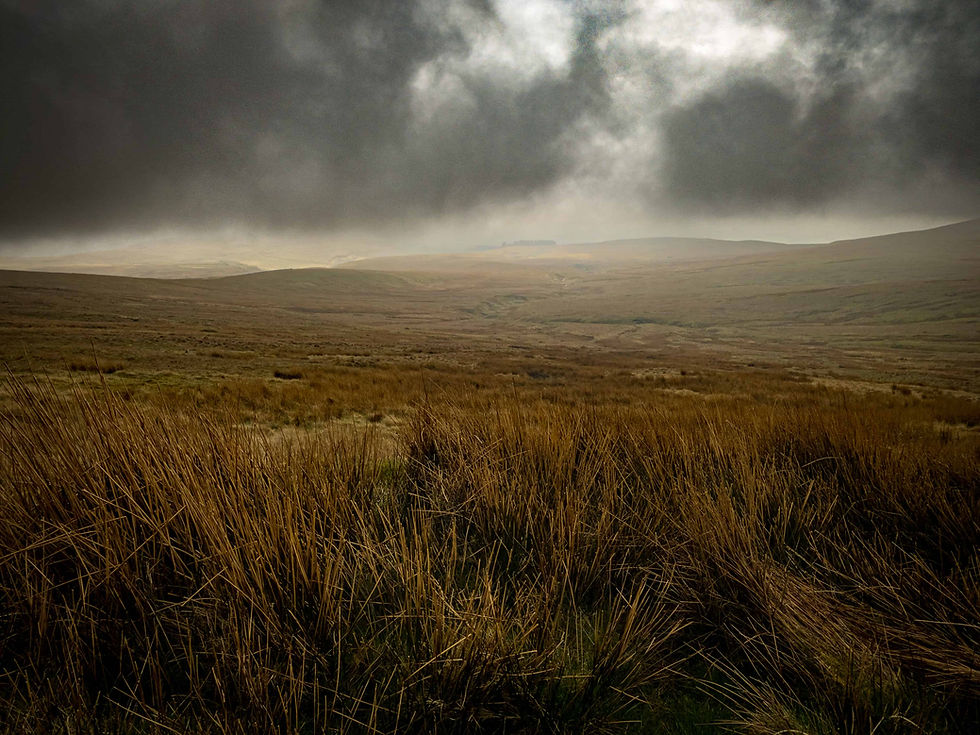
Ingleborough is one of the most recognisable mountains in the Yorkshire Dales and one of the famous Yorkshire Three Peaks. Standing at 723 metres, its distinctive flat-topped summit dominates the surrounding landscape.
Several routes lead to the summit, but this circular walk from Clapham offers a particularly varied experience. From peaceful woodland and limestone gorges to open moorland, steep rocky climbs, and sweeping summit views, you'll have plenty to enjoy along the way.
It's also a fantastic solo hiking route, offering a rewarding mountain walk without taking on the full Yorkshire Three Peaks Challenge.
In this guide, I'll take you through the route from Clapham, including Trow Gill, the ascent to Ingleborough's summit and the return across the limestone landscape of Long Scar. I'll also cover parking, navigation, what to expect from the terrain, and a few key things to consider before you head out.
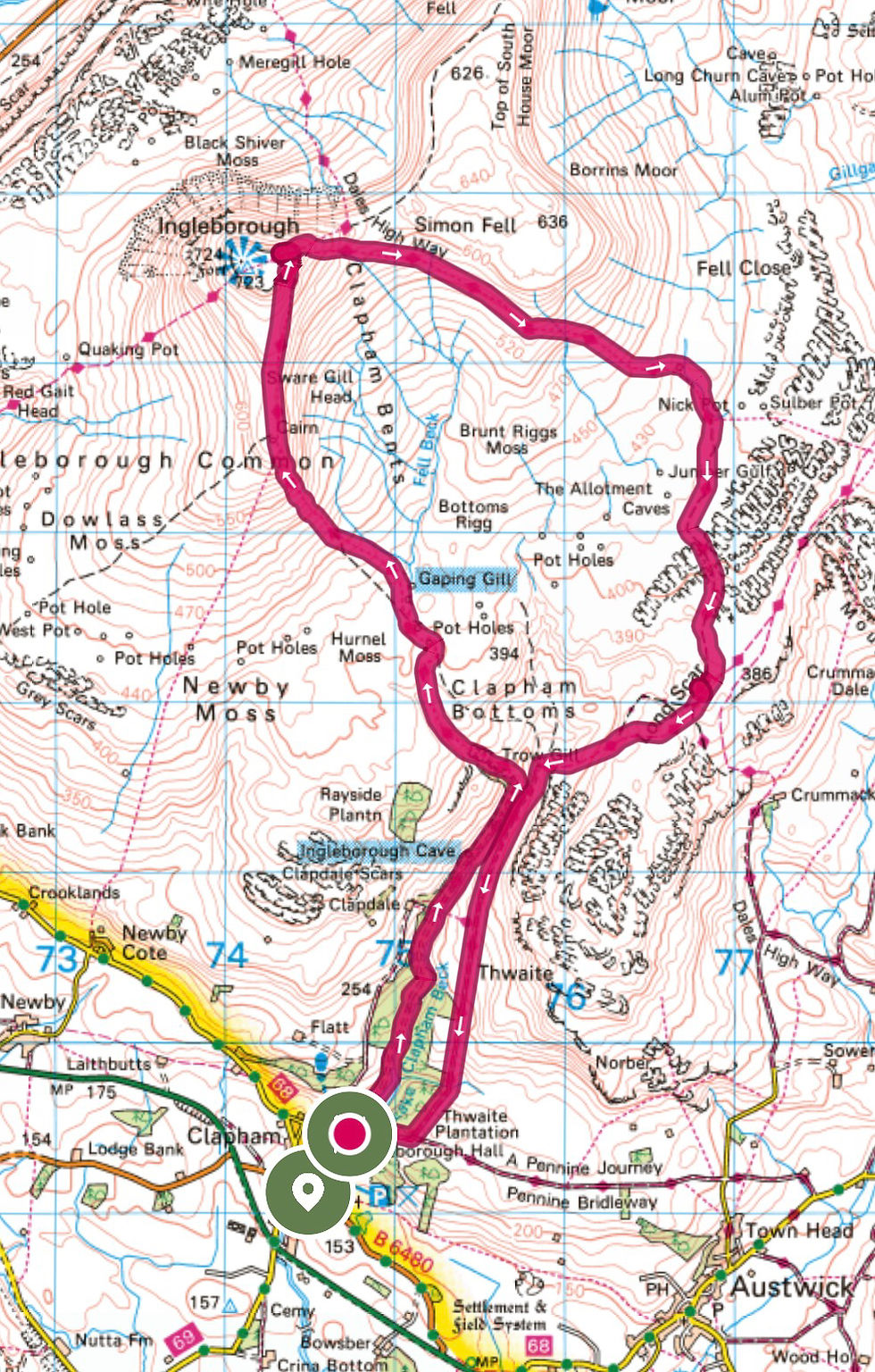
Ingleborough Circular Walk – Route Overview
Location: Ingleborough, Yorkshire Dales National Park
Start and finish: Clapham, North Yorkshire
Distance: Approximately 10 miles (16 km)
Elevation gain: Approximately 645 metres
Summit height: 723 metres
Time: Approximately 5–6 hours, depending on conditions and stops
Difficulty: Moderate, with strenuous sections
Terrain: Woodland paths, limestone gorge, steep rocky ascents, open fell and limestone pavement
Parking: Clapham public car park, LA2 8EQ
Facilities: Public toilets, cafés and refreshments in Clapham
Navigation: OS Explorer OL2 – Yorkshire Dales Southern & Western Areas
Dogs: Check estate access arrangements and keep dogs under close control around livestock and steep ground
Route times are estimates. Always allow additional time for photography, breaks, navigation and changing weather conditions.
GPX Download:
This post may contain affiliate links. I only ever recommend products that I have personally tried, tested, and genuinely believe in. If you purchase through one of my links, I may earn a small commission at no extra cost to you. This helps support my blog and allows me to keep sharing honest reviews and hiking content. Thank you for your support!
Hiking Ingleborough from Clapham
Ingleborough might not be the highest of the Yorkshire Three Peaks, but it certainly isn't short of character.
This route is so enjoyable because of its varied terrain. Rather than simply climbing a mountain and returning along the same path, the walk takes you through several completely different landscapes.
The woodland and limestone scenery around Clapham provide a relatively gentle introduction before the route becomes more adventurous at Trow Gill. From there, the climb to the summit is considerably more demanding, and the broad plateau eventually opens up to fantastic views across the Yorkshire Dales.
There's also something particularly satisfying about walking up a mountain you've seen dominating the landscape from miles away.
For anyone building confidence in solo hiking, this is an excellent route to consider in suitable conditions, provided you're comfortable navigating open fell terrain and tackling a sustained climb.
Ingleborough Walking Route – Step by Step
1. Starting the Walk from Clapham
The walk begins in the pretty Yorkshire Dales village of Clapham, which makes an excellent starting point for exploring Ingleborough.
A public car park sits near the centre of the village, along with toilets, cafés, and a place to pick up refreshments before you set off.
Once you leave Clapham, there are no shops or cafés on the mountain itself, so pack enough food and water for the entire walk.
From the village, the route heads to the entrance of the Ingleborough Estate Nature Trail, a beautifully maintained woodland walk leading to Ingleborough Cave.
It's a lovely way to start the day, especially if you head out early before the area gets busier.

2. Ingleborough Estate Nature Trail
The Ingleborough Estate Nature Trail offers a scenic introduction to the walk, following a well-established path through woodland alongside the lake and the surrounding limestone landscape.
The trail features lovely little spots, including woodland follies and views of the surrounding hills.
Unlike much of the mountain route, this section is relatively sheltered and provides a gentler start before the climbing begins.
The nature trail is privately managed, and it normally charges an admission fee. A public footpath alternative is also available for walkers who prefer not to use the paid trail.
Ingleborough Cave is another attraction along this section. The show cave lets you explore the underground limestone landscape, but it's worth saving a visit for a separate trip if you're planning to complete the full hike.
Past the cave, the route continues toward one of its most distinctive features, Trow Gill.

3. Trow Gill – The Limestone Gorge
Trow Gill is undoubtedly one of the highlights of this Ingleborough walk.
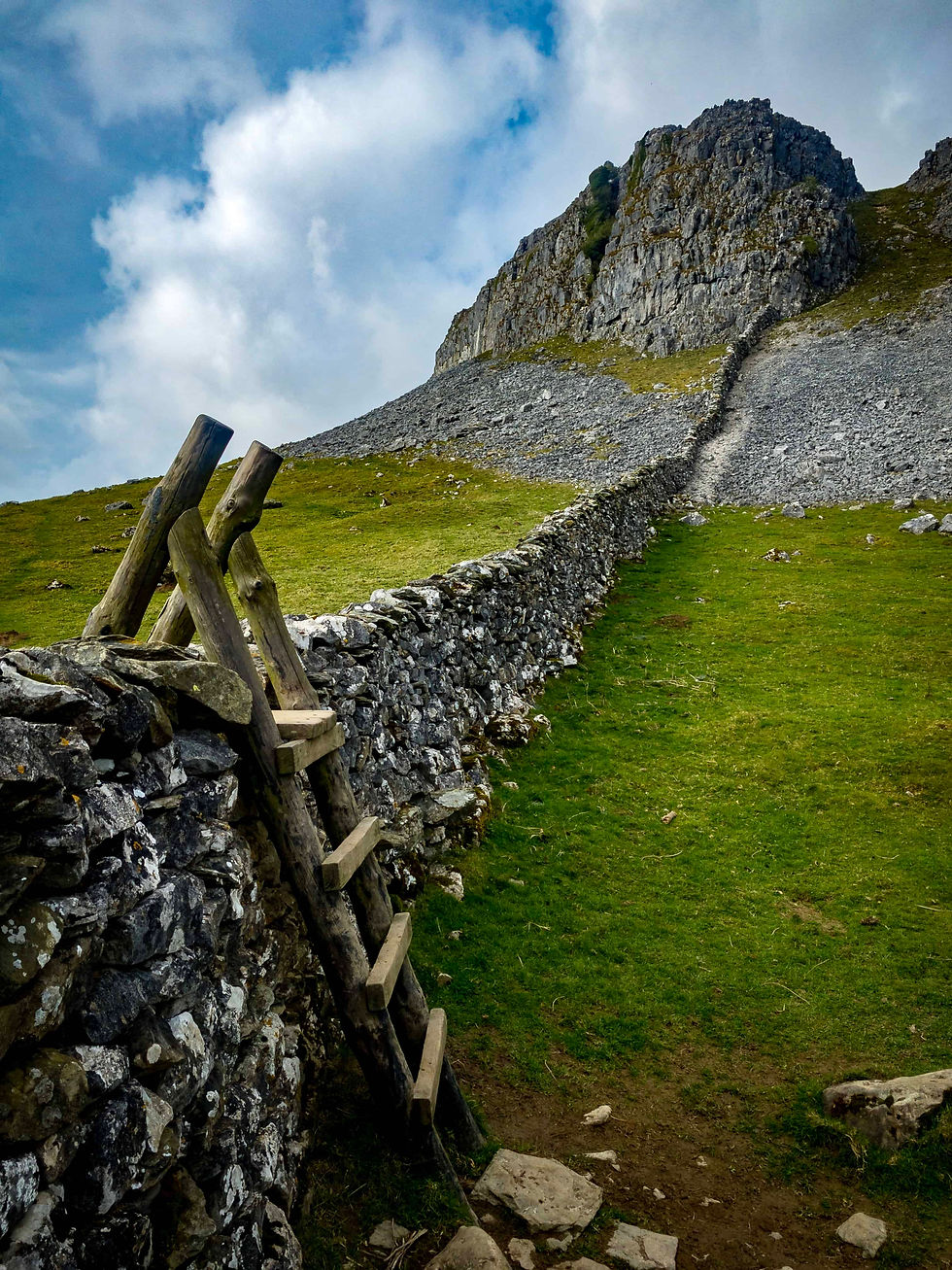
The landscape changes quite dramatically as the route enters a narrow limestone gorge, with steep rock walls rising on either side.
It's a fascinating place, and quite different from the exposed hillside walking that follows.
The path becomes increasingly rocky, with uneven ground and boulders underfoot. In places, you may need to use your hands for balance, especially if the limestone is wet.
Although this isn't a technical climbing route, it's worth taking your time through the gorge.
Limestone can become extremely slippery in damp conditions, and the confined terrain means you need to pay close attention to your footing.
For solo hikers, I recommend putting the camera away on trickier ground and stopping somewhere safe if you want to take photos.
As you leave the gorge behind, the landscape gradually opens out towards the upper slopes of Ingleborough.
4. The Ascent to Ingleborough Summit
After Trow Gill, the route begins its more demanding climb towards the summit.
The next few kilometres involve a sustained ascent across open hillside, with the terrain becoming increasingly steep as you gain height.
Initially, you'll walk mostly on grassy paths, but higher up the route becomes rockier, with sections of stone steps and uneven limestone.
This is where you'll begin to appreciate the elevation gain.
Although Ingleborough is often described as a moderate walk, the climb is still a proper mountain ascent, particularly when carrying a full daypack.
The lack of shelter also becomes more noticeable as you gain height. Even on a relatively pleasant day in Clapham, temperatures and wind conditions can differ significantly higher up.
Take your time, stop when you need to, and regularly check your progress against your planned route.
Eventually, the gradient eases as you reach Ingleborough's broad summit plateau.

5. Ingleborough Summit – 723 Metres
Reaching Ingleborough's summit is a fantastic reward for the climb.
Unlike the sharp, pointed summits of some Lake District mountains, Ingleborough has a broad, relatively flat plateau that gives it such a distinctive appearance from below.
On a clear day, views extend across the surrounding Yorkshire Dales to Pen-y-ghent and Whernside, the other two Yorkshire Three Peaks.
Looking further afield, you may also see the Howgill Fells, the Lake District mountains, and Morecambe Bay.
The summit is also an important historical site, with archaeological remains associated with prehistoric occupation.
There's a trig point and a stone wind shelter, but neither offers adequate protection in severe weather.
Remember that the broad plateau can become surprisingly difficult to navigate in mist or low cloud.
When visibility is poor, it can be hard to identify the correct descent direction, particularly with several paths leading away from the summit.
This is where a planned GPX route, a paper map, and a compass become particularly important.
Take some time to enjoy the views, have something to eat and add an extra layer if you've stopped moving.
Even in summer, you can get cold quickly after a strenuous climb.

6. Descending Ingleborough
From the summit, the circular route descends across the limestone landscape towards Long Scar and Clapham.
Although the hardest climbing is behind you, don't underestimate the descent.
Some sections are steep and rocky, and tired legs can make uneven ground harder to navigate.
It's tempting to relax once you've reached the summit, but many slips and falls happen on the way down, when concentration begins to drop.
Take particular care on wet limestone and loose or uneven rock.
As you lose height, the dramatic summit scenery gradually gives way to more open limestone country.
This is another wonderful aspect of the route, with the landscape changing yet again as you leave the mountain behind.

7. Long Scar and the Return to Clapham
The return across Long Scar provides a completely different experience from the ascent through Trow Gill.
Here, limestone pavements, open grassland, and far-reaching views across the Yorkshire Dales dominate the landscape.
Limestone pavement is a characteristic feature of this part of Yorkshire, formed over thousands of years as water gradually dissolved the exposed rock.
The result is a fascinating landscape of blocks, cracks and natural channels.
Although the walking generally becomes less strenuous, the ground can still be uneven, so watch your footing.
The route eventually makes its way back towards the Clapham area, completing a varied circular walk that takes in some of the best scenery around Ingleborough.
And, of course, one advantage of starting in Clapham is that you've got somewhere to stop for a well-earned coffee or something to eat before heading home.

How Difficult Is the Ingleborough Walk?
I'd describe this particular Ingleborough route as moderate, with some strenuous sections, rather than an easy hill walk.
At about 10 miles with around 645 metres of elevation gain, it requires reasonable fitness and some experience walking on uneven mountain terrain.
The main challenges are:
The sustained climb towards the summit
Rocky and potentially slippery ground through Trow Gill
Exposed conditions on the upper mountain
Navigation across the broad summit plateau in poor visibility
The steep and uneven descent
In good weather, with clear visibility, this is an achievable route for reasonably experienced walkers.
However, conditions can change the difficulty considerably.
Heavy rain, strong winds, low cloud, ice or snow can make the same route substantially more challenging.
If you're relatively new to mountain hiking, I'd recommend choosing a settled weather day and making sure you're confident with both the distance and elevation before setting off.
Is Ingleborough Suitable for Solo Hiking?
Ingleborough can be a great mountain for solo hiking, but you shouldn't underestimate it.
One of the things I enjoy most about hiking alone is setting my own pace, stopping wherever I want, and enjoying the outdoors without feeling rushed.
However, hiking solo also means taking responsibility for your decisions, particularly route planning, weather conditions, and knowing when to turn around.
For this route, I'd recommend being confident with navigation, comfortable walking over rocky terrain, and prepared to be on the mountain longer than anticipated.
Also, although Ingleborough is popular, you can't assume others will always be nearby if something goes wrong.
Before setting off, I always recommend sharing your planned route and expected return time with someone at home.
You can also read my more detailed guides to solo hiking safety and the ultimate guide to solo hiking.
What to Pack for Hiking Ingleborough
Even though this is a relatively accessible mountain from Clapham, I'd always recommend packing for a full mountain day rather than treating it as a short countryside walk.
Some of my essentials include:
Waterproof jacket and trousers
Suitable hiking boots or shoes with good grip
Warm insulating layer and spare clothing
Plenty of water and high-energy snacks
Fully charged phone and downloaded GPX route
Paper OS map and compass
Headtorch, even if I don't expect to be out after dark
First aid kit and emergency shelter
Portable power bank
Additional food and warm layers in case of an unexpected delay
I also carry a Garmin inReach Mini as an additional means of emergency communication when hiking alone. It's not a replacement for good planning or navigation, but it adds another layer of reassurance where mobile signal is unreliable.
One thing I think is often overlooked is preparing for what happens if you can't continue walking.
If you fall, get injured, or need mountain rescue assistance, you could wait several hours for help to arrive.
During that time, staying warm and protected from the elements becomes incredibly important.
An emergency shelter, extra insulation, and enough food and water to handle an unexpected delay are all worth the extra space in your backpack.
For more on what I carry, check out my hiking gear guides.

Navigating Ingleborough Safely
I take navigation seriously whenever I'm hiking, especially when heading out alone.
Although much of the Ingleborough route follows established paths, the summit plateau can become disorientating in poor visibility.
Before setting off, I'd recommend downloading your GPX route and familiarising yourself with the main landmarks and descent points.
I use OS Maps for planning and navigation, but I also carry a paper map and compass as a backup.
A GPX route is useful, but it doesn't replace knowing where you are or being able to navigate independently if your phone stops working.
Weather is another important consideration.
Ingleborough's summit is exposed, and strong winds, rain and low cloud can quickly change the character of the walk.
I always check the mountain weather forecast rather than relying solely on the general weather forecast for the nearest village.
In winter, snow and ice can make sections of the ascent and descent hazardous.
Microspikes can help on some relatively straightforward icy paths, but they don't replace crampons and an ice axe on steep or serious winter terrain.
Personally, I wouldn't head out on a route requiring crampons and an ice axe without the right training, experience, and confidence.
There's absolutely nothing wrong with choosing a different route or turning around when conditions are beyond your abilities.
For more advice, check out my winter hiking safety guide and winter hiking gear guide.

Parking and Facilities for Ingleborough
Parking in Clapham
The most convenient starting point for this route is Clapham public car park.
Postcode: LA2 8EQ
Parking availability can vary, particularly on weekends, bank holidays, and during the busier summer months.
I recommend arriving early when possible and checking the latest parking arrangements before you travel.
Toilets and Refreshments
Clapham has public toilets, cafés, a pub and a village shop.
These facilities are useful before or after your hike, but there are no refreshments once you head out onto the mountain.
Make sure you have enough food and water.
Ingleborough Estate Nature Trail
If you choose to walk the estate nature trail, check the current admission charge and access arrangements before you go.
A public footpath alternative is also available if you prefer to avoid the paid entrance.
Other Routes to Ingleborough Summit
Although I particularly like the variety of the Clapham circular route, several other routes reach Ingleborough.
From Ingleton: A popular approach via Fell Lane and Crina Bottom, climbing across open hillside towards the summit.
From Horton-in-Ribblesdale: A longer approach crossing the limestone landscape around Sulber, often used as part of the Yorkshire Three Peaks Challenge.
From Chapel-le-Dale: Another well-known route from the north, passing near the fascinating limestone scenery around Great Douk Cave.
Each route offers a slightly different experience, so consider your fitness, available time, and the weather before choosing which one to tackle.

Final Thoughts – Is Ingleborough Worth Hiking?
Absolutely.
What I particularly like about this Ingleborough route is that it offers so much more than simply reaching the summit.
The woodland trails, dramatic limestone gorge, challenging ascent, wide-open summit views and fascinating limestone pavements make it a wonderfully varied day in the Yorkshire Dales.
It's also a rewarding mountain for anyone wanting to build confidence and experience in solo hiking, provided they choose suitable conditions and prepare properly.
For me, that's one of the best things about heading into the hills alone. It's not just about the summit or the distance covered, but having the freedom to explore, challenge yourself and enjoy the experience at your own pace.
If you're looking for a memorable Yorkshire Dales mountain walk, add the Ingleborough circular route from Clapham to your list.
More Hiking Routes and Guides
If you're planning more adventures in the Yorkshire Dales or Lake District, you might also enjoy:


Comments