
You Don’t Have to Be Fearless to Go Solo
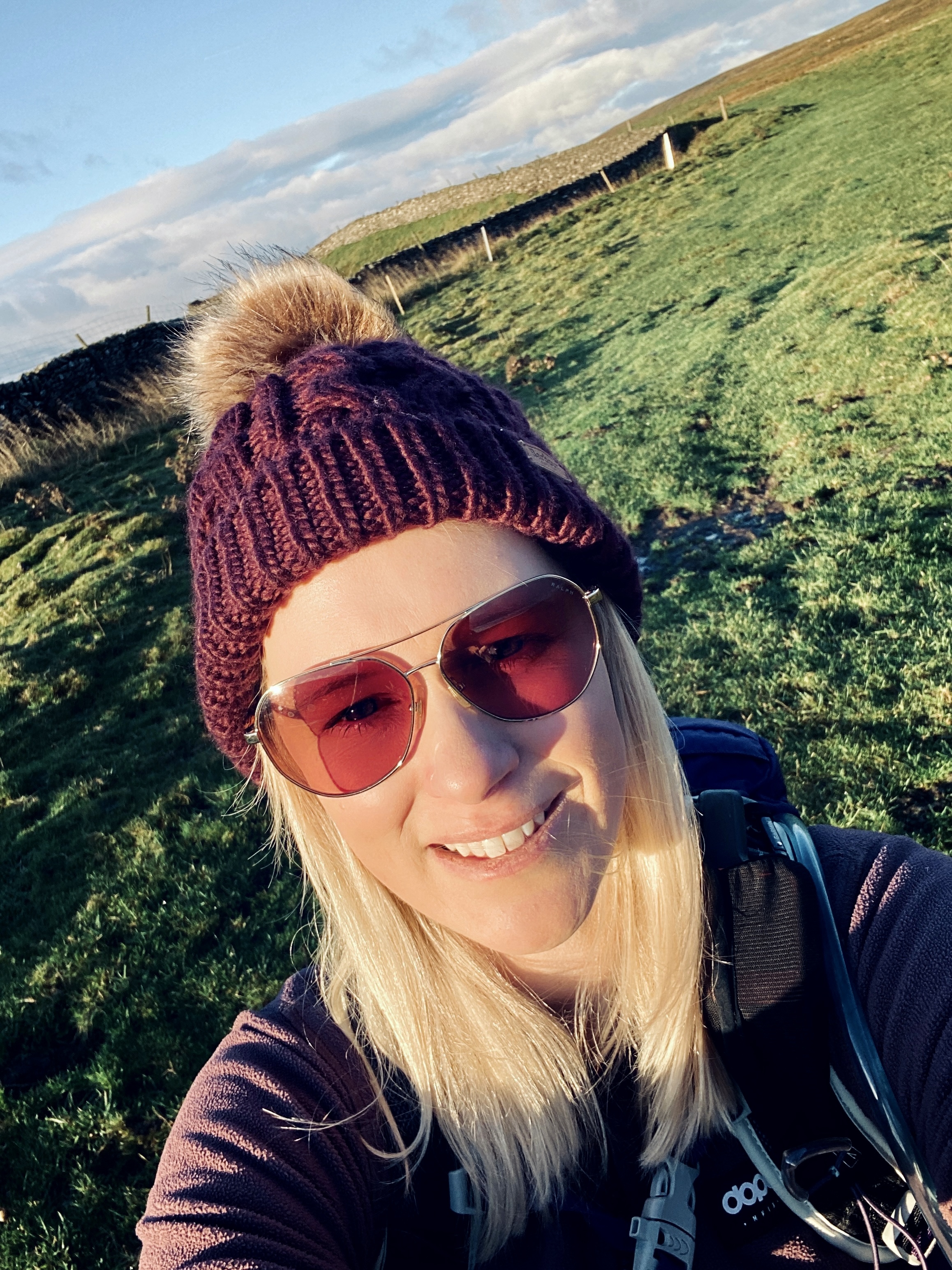

Solo Female Hiking and Wild Camping: exploring women's safety, the psychology of fear and building outdoor confidence.
I was wild camping near Angle Tarn in the Lake District, having deliberately chosen a quieter spot away from where others were likely to be camping. The sun had gone down, and I'd been sitting outside my tent watching the light gradually disappear. There's something quite comforting about watching darkness fall naturally. Your eyes adjust, and being alone in the dark somehow feels less intimidating.
Then, out of the darkness, three figures appeared over the ridgeline behind me.
They walked slowly toward my tent, and what immediately unsettled me was that none of them had a headtorch. Why were three people walking across the fells in the dark without torches? Had they seen me? How did they even know I was there?
I rarely leave a light on when I'm wild camping. Aside from enjoying the darkness, I prefer to keep my presence relatively discreet. But as the figures kept approaching, I grew increasingly anxious, my mind already running through different scenarios.
And then they turned sideways.
They were deer. Three deer.
I actually laughed out loud, partly through relief and partly at how convincingly my mind had interpreted their silhouettes as people. My laughter must have alerted them to my presence because they suddenly started running, passing right by my tent.
What had initially felt like one of my most frightening wild camping experiences turned into one of my absolute highlights.
I often think about that evening because it illustrates just how heightened our awareness can become when we're alone in an unfamiliar environment. It wasn't what was happening that frightened me, but what I thought was happening.
Why I started going solo
My journey into solo female hiking and wild camping didn't begin because I was fearless. It began because my desire to experience these things outweighed my desire to stay in my comfort zone.
I still remember my first solo hike in the Lake District, up near Haystacks. Standing among the mountains and looking around at the landscape, I felt as though I'd discovered an entirely new world. I remember being genuinely delighted to see ducks swimming on a tarn up there.
The vastness of the landscape, the absence of crowds and the feeling of being completely surrounded by nature were things I didn't want to leave behind. I remember thinking how incredible it would be to sleep up there, watch the sun go down and wake up amongst the mountains the following morning.
That's what led me to wild camping. Not to challenge myself, prove how brave I was, or demonstrate my independence. I simply wanted to spend longer in the mountains.
That doesn't mean I wasn't frightened.
Before my first solo wild camp, I spent a considerable amount of time researching. I invested in equipment, bought a Garmin inReach Mini so I could communicate in areas without a mobile signal, and took precautions to manage the risks associated with being alone in the mountains.
But my fears weren't limited to encountering other people. I was also concerned about getting injured, losing my way, the weather changing unexpectedly and how I would manage if something went wrong when there was nobody else around.
Over time, through experience, I've become more comfortable with being alone in the outdoors. I've learnt more about the environments I'm exploring, developed my skills and become more confident in my ability to make decisions when things don't quite go to plan.
For women, however, that decision-making process often has another layer. One that extends far beyond the mountains and into our everyday lives. And one that I think deserves a much wider conversation.

Why Women Experience the Outdoors Differently
Despite what you might expect, I rarely feel unsafe in the mountains. In fact, the outdoors is where I often feel most comfortable. But when I reflect on some of the decisions I make when solo hiking and wild camping, I realise how many are influenced by being a woman.
And it starts before I've even left the car park.
When I get out of my car with a large backpack, it's fairly obvious that I'm heading off to spend a night in the mountains. I'm naturally aware of who's around me, who's noticed me and whether anyone else appears to be heading in the same direction.
If I see a group of lads with large backpacks, I find myself wondering where they're planning to camp. Are they heading to the same area as me? Will our paths continue to cross? It's not particularly easy to put some distance between yourself and others when you're carrying a heavy backpack up a mountain.
My partner always knows where I'm heading, where I'm planning to camp, when I've set off, when I've arrived and when I'm safely back at the car. It's one reason I never head into the mountains without my Garmin inReach Mini. Even without a mobile phone signal, I can stay in contact with home, and I have access to an emergency SOS function should I need it.
Of course, these are sensible precautions for anyone exploring the mountains alone, regardless of gender. But some of my other decisions are more specific to being a solo female.

Choosing where to wild camp
I tend to avoid popular wild camping spots. Even when visiting somewhere as popular as Angle Tarn, I'll choose somewhere away from the tarn itself, where I can enjoy the surrounding scenery without camping alongside others.
If I arrive at my intended camping spot and there are already tents pitched, I'll generally move on. Partly because solitude is one of the reasons I wild camp in the first place. Still, I'd be lying if I said personal safety didn't influence that decision too.
One of the situations I find most uncomfortable is when I've already pitched my tent and someone, particularly a man or a group of men, walks past and sees that I'm there alone.
If I notice people approaching in the distance, I'll sometimes retreat into my tent. Not because they've done anything to make me feel threatened, but because I'd rather they didn't know that the person inside that tent was a woman on her own.
If I know I've been noticed, I might even consider packing everything away and moving somewhere else.
When you actually stop and think about it, it's quite frustrating. I've spent hours hiking up a mountain carrying everything I need for the night, found a suitable place to camp and pitched my tent. Yet I'm potentially contemplating doing it all again simply because someone knows I'm there.
I wonder how many men have ever found themselves in that same situation.
That's not to suggest men never feel vulnerable when hiking or camping alone. Of course they do. But I suspect many wouldn't necessarily consider their gender when deciding where to pitch their tent, whether to make themselves visible or whether they need to move after being seen by someone else.

The wider reality of women's safety
These thought processes aren't exclusive to the outdoors. For many women, they're an extension of the decisions we make throughout our everyday lives, often without giving them much conscious thought.
Research published by Active Travel England, following YouGov polling in February 2026, found that:
88% of female respondents had felt unsafe walking alone at night.
38% said they always or often felt unsafe.
71% had altered their walking routes to avoid walking in the dark during winter or darker months.
Research conducted by the Office for National Statistics (ONS) in February and March 2022 also highlighted a considerable disparity between men and women.
When asked about walking alone in parks and open spaces after dark, 82% of women felt unsafe, compared with 42% of men.
They influence where we go, when we go, which routes we take, and sometimes whether we go at all.
It's important to recognise that these statistics reflect perceptions of personal safety rather than the actual likelihood of experiencing a crime. They aren't specific to hiking or wild camping. But that doesn't make those feelings any less significant, particularly when they begin to restrict the experiences women feel able to have.
There is a difference between feeling safe and not having to think about your safety. I generally feel safe in the mountains, but I'm rarely completely free of those additional considerations as a woman.
The question is, why should women have to make so many adjustments to their own behaviour to feel comfortable doing something as ordinary as spending time outdoors?
It's Not All Men. But Women Don't Know Which Men.
Almost every man I've encountered whilst hiking and wild camping has been friendly, polite and respectful. I struggle to recall an encounter in the mountains where I've genuinely felt threatened by another person.
But there have been occasions when seemingly innocent interactions have left me feeling a little uncomfortable.
I remember returning to my van after one of my adventures to find a note asking if I'd like to go for a coffee. I'd had a brief conversation with a man earlier on the mountain, during which I'd mentioned that I was wild camping.
I'm sure it was intended as a friendly gesture. However, my immediate thoughts weren't about going for a coffee.
How did he know which vehicle was mine? Had he seen me arrive? Had he been watching where I was going?
There was probably a perfectly innocent explanation, particularly as I think mine was the only vehicle in the car park. But whilst he may have thought very little about leaving that note, it prompted an entirely different thought process for me.
And I think that's something worth recognising. There can be a considerable difference between the intention behind someone's actions and how another person experiences them.

Understanding risk and uncertainty
Having studied forensic psychology at both undergraduate and postgraduate level and worked within custodial settings, understanding offending behaviour and assessing risk have formed a significant part of my professional journey.
When I encounter someone in the mountains, I'm often making a quiet assessment of the situation. I consider their behaviour, the context of the interaction, and whether anything suggests a genuine cause for concern.
My understanding of the complexities of offending behaviour helps me put some of my fears into perspective. It reminds me that encountering an unfamiliar man in an isolated location doesn't automatically mean I'm in danger.
Equally, I know that there is no single profile of someone who commits a violent or sexual offence. I cannot reliably determine whether someone presents a risk based on their appearance, interests or a brief conversation on a mountainside.
When women take precautions around unfamiliar men, they aren't necessarily judging that individual. They're managing uncertainty and considering the potential consequences of getting that judgement wrong.
Even with my professional knowledge and experience, I still find myself making these assessments. It's interesting to reflect on how I sometimes draw upon my understanding of human behaviour simply to reassure myself that I can enjoy an activity I love.
Personal safety isn't exclusively a women's issue
I've previously had a conversation with a male outdoor content creator who shared his experiences of being stalked by women. As a result, he's cautious about sharing his whereabouts on social media and avoids announcing where he's going in advance.
It's an important reminder that men can also experience harassment, stalking and feelings of vulnerability, and their experiences shouldn't be dismissed.
I know it's not all men.
But knowing that many encounters are harmless isn't the same as knowing that the person in front of you poses no threat.

What Men Can Do to Help Women Feel Safer Outdoors
While I've had overwhelmingly positive experiences with men outdoors, I think there are some small things men can do to help women feel more comfortable.
On the mountains
Be mindful of personal space. Having someone walking closely behind you on an isolated path can feel uncomfortable, particularly when you're alone.
Be mindful of the questions you ask. Asking a woman whether she's alone, where she's heading or where she's planning to camp may seem like innocent conversation, but it can leave her feeling vulnerable.
Respect boundaries. If a woman appears reluctant to engage in conversation, try not to take it personally.
Be aware of group dynamics. A group of men or teenage boys can feel intimidating to a woman alone, even when nobody in that group has behaved inappropriately.
Don't assume that a woman alone needs assistance or company. By all means, offer help if someone appears to need it, but respect their response.
This isn't about asking men to stop being friendly or making them feel uncomfortable about approaching women in the outdoors. Some of the loveliest conversations I've had in the mountains have been with complete strangers.
Beyond the mountains
Perhaps the most meaningful changes, however, need to happen away from the mountains.
It's about challenging inappropriate comments, sexist jokes and attitudes towards women within male friendship groups. It's about recognising when behaviour crosses a boundary, even when others dismiss it as harmless banter.
It's about listening when women talk about their experiences, rather than immediately responding with 'not all men', questioning whether their concerns are justified or telling them they're overreacting.
And it's about recognising that being someone who would never harm a woman doesn't mean there's nothing you can do to improve women's safety.
Supporting women without reinforcing their fears
Over the years, I've lost count of the number of times people have responded to my solo adventures with comments such as:
'Aren't you scared?'
'You can't go wild camping on your own!'
'What if someone attacks you?'
And, on occasion, quite bluntly telling me that I'm going to get murdered.
These comments come from both men and women, and whilst I appreciate that they often come from a place of genuine concern, I find them increasingly frustrating.
I wonder how many women have considered going on their first solo adventure, only to have those fears reinforced by the people around them.
There is a difference between acknowledging someone's concerns and encouraging them to believe the worst possible outcome is likely.
What's particularly interesting is that when we look at the statistics surrounding violence against women, the circumstances we often fear aren't necessarily representative of where and how these offences most commonly occur.
According to research published by the Office for National Statistics (ONS), drawing on Crime Survey data from 2020 and 2025:
Just 15% of female victims of rape or assault by penetration, including attempted offences, identified a stranger as a perpetrator.
39.3% of female victims experienced the assault in their own home.
Across both male and female victims, 8% experienced the assault in a park, open public space, car park or street.
Yet when I tell someone I'm spending a night alone in the mountains, it's the threat of violence from a stranger that people so frequently raise.
These figures describe reported experiences, not the likelihood of an assault on a solo hike. They don't mean the risk from strangers doesn't exist, but they encourage us to question whether our perception of danger reflects the circumstances in which these offences occur.
Responsibility for violence lies with those who perpetrate it, not with women restricting their own lives to avoid it.

Are We Afraid of the Wrong Things?
When people express concerns about my solo adventures, it's interesting how rarely those concerns relate to the mountains themselves.
Nobody tends to ask whether I've checked the wind speed, whether I'm confident navigating in poor visibility or whether I'm adequately equipped for a sudden temperature change. Instead, the conversation almost always centres around the possibility of encountering someone dangerous.
I explored this in my previous article, How Safe Is It to Solo Hike and Wild Camp in the UK's National Parks?, where I looked at crime statistics, mountain rescue incidents, and the environmental risks associated with exploring our National Parks.
Whilst no environment is entirely free from risk, I believe we sometimes give disproportionate attention to certain dangers whilst significantly underestimating others.
The psychology of fear and risk
The availability heuristic
When something is particularly memorable, emotionally distressing or widely reported in the media, we can begin to perceive it as more likely to happen than it actually is.
A highly publicised attack on a woman walking alone can understandably influence how safe other women feel. Yet the countless women who spend time outdoors alone without experiencing any problems don't make the headlines.
Negativity bias
We naturally pay more attention to negative experiences and information than positive ones. From an evolutionary perspective, being alert to potential threats has an important survival function.
However, this can also mean that one frightening news story carries more psychological weight than hundreds of positive experiences shared by other solo female adventurers.
Anticipatory anxiety
Sometimes it's not the experience itself that frightens us, but anticipating what might happen.
We imagine different scenarios, consider everything that could go wrong and experience anxiety about situations that haven't actually occurred. That anxiety can be enough to prevent us from setting off in the first place.
Avoidance
Avoiding something we're afraid of often provides immediate relief. However, over time, avoidance can reinforce our fears by keeping us from experiences that might challenge our expectations and help us build confidence.
None of this suggests that women's fears are irrational. Violence against women is real, and our perceptions of safety are shaped by personal experiences, societal attitudes and the experiences of others.
But understanding these psychological processes can help us recognise when fear influences our decisions more than the available evidence.
Are we underestimating the dangers of the mountains?
Weather, navigation and terrain deserve just as much attention as concerns about encountering other people. We can prepare for these risks, as we'll explore below.
Confidence versus competence
We talk a lot about building confidence in the outdoors. Still, I think it's equally important to talk about building competence.
You can feel incredibly confident heading into the mountains but lack the navigation skills, knowledge or experience needed to manage a difficult situation. Equally, you can feel anxious about a solo adventure despite being well prepared and having the skills to undertake it safely.
Feeling confident doesn't automatically mean you're safe, just as feeling frightened doesn't automatically mean you're in danger.
This is why I think mountain skills courses are such a worthwhile investment, particularly for anyone wanting to explore independently.
Learning to navigate with a map and compass, interpret mountain weather forecasts, recognise environmental hazards, and make informed decisions when conditions change can make a significant difference to both your safety and your confidence.
Organisations such as TeamWalking offer courses designed to help people develop the practical skills needed to become more independent mountain walkers.
It's also important to recognise how our thinking can influence our decisions in the mountains. Having spent hours travelling to the Lake District, for example, it can be tempting to continue with a planned hike despite deteriorating weather, simply because we've invested so much time and effort in getting there.

The Risks I Actually Prepare for When Hiking Alone
In 2025, Mountain Rescue England and Wales received 3,968 calls for assistance, resulting in 3,175 team deployments. Injuries, navigation difficulties, exhaustion and exposure to the elements are among the reasons people require assistance in the outdoors. These figures cover all callouts, not just solo hikers or weather-related incidents.
While not every mountain rescue incident is preventable, understanding the environment and making informed decisions before and during a hike can reduce risk.
Understanding mountain weather forecasts
One of the most important things I do before any solo adventure is check the weather. And I don't mean simply checking the weather app on my phone to see whether it's going to rain.
Mountain weather can differ considerably from conditions in the surrounding towns and villages. A relatively pleasant day in the valley can feel entirely different several hundred metres higher up.
I'd always recommend using a specialist mountain weather forecast, such as:
Wind speed, gusts and direction
Wind is probably one of the biggest factors influencing whether I undertake a particular hike. Strong winds can make walking exhausting, affect your balance and become particularly dangerous on exposed ridges or steep terrain.
Gusts can be significantly stronger than the average wind speed, and even moderate winds can affect balance on exposed terrain.
Look at the forecast gusts rather than just the average wind speed, and consider the wind direction in relation to your planned route.
Cloud cover and visibility
I personally prefer not to hike in the clouds. Partly because I love the views, but poor visibility also adds challenges when navigating alone.
A path that seems obvious in clear conditions can become much harder to follow when visibility drops to just a few metres.
Understanding the forecast cloud base in relation to the elevation of your planned hike can help you decide whether to choose an alternative, lower-level route.
Temperature and wind chill
I actually love hiking in cold weather, but there's a considerable difference between the forecast temperature and how cold it may feel on an exposed mountainside.
Wind chill, particularly when combined with rain and damp clothing, can cause you to lose body heat quickly. Hypothermia isn't exclusively a winter risk, so carry sufficient insulating layers regardless of the time of year.
Snow, ice and ground conditions
Snow and ice can completely change the difficulty of a familiar hiking route. Terrain that is relatively straightforward in summer may require specialist winter equipment and skills.
Rainfall and river crossings
It's not just the weather on your day of hiking that matters. Heavy rainfall in the preceding days can affect ground conditions, increase river levels and make streams that would ordinarily be straightforward to cross dangerous.
Never feel obliged to attempt a river crossing simply because it's part of your planned route. Turning back or finding a safe alternative is always preferable.
Planning my route
Alongside the weather, there are several other things I consider before setting off alone:
Daylight hours: How long is the hike likely to take, and how much time do I have before darkness falls? I always allow additional time for breaks, photographs and unexpected delays.
Terrain: Does the route involve scrambling, exposed ridges, steep descents or river crossings?
Navigation: Am I confident navigating the terrain, particularly if visibility deteriorates? Do I have offline maps and a backup navigation method?
Escape routes: If the weather changes, I get injured, or I'm simply not enjoying the hike, are there alternative routes that let me descend safely?
Physical ability: Am I realistically capable of completing the distance and elevation gain in the expected conditions?
Emergency communication: Can I contact someone if something goes wrong, particularly in areas without mobile phone coverage?
When you're hiking alone, a relatively minor incident can become more significant. Something as simple as twisting an ankle may leave you unable to continue, potentially exposed to the elements for several hours.
That's why I consider not only what I need to complete the hike, but what I might need if I can't finish.

When Should You Not Go Hiking Alone?
Knowing when not to head into the mountains is just as important as developing the confidence to go alone.
There isn't necessarily a definitive set of weather conditions that make hiking alone unsafe. Much depends on your experience, equipment, navigational skills and the terrain you're planning to explore. However, certain conditions should prompt you to reconsider your plans.
Conditions | What to consider |
Strong winds | Avoid exposed ridges, steep drops and high summits. Consider a more sheltered route. |
Low cloud and poor visibility | Choose a lower-level route if you lack experience navigating in poor visibility. |
Heavy or prolonged rainfall | Consider rising river levels, flooding, slippery terrain and the increased risk of hypothermia. |
Snow and ice | Avoid terrain that requires winter equipment and skills you haven't yet developed. |
Thunderstorms | Postpone mountain hikes where thunderstorms are forecast, particularly routes involving exposed summits and ridges. |
Limited daylight | Choose a shorter route, allow sufficient time for unexpected delays and always carry a headtorch. |
Extreme cold and wind chill | Consider whether your clothing and emergency equipment would be sufficient if you can't keep moving. |
Severe weather warnings | Check the expected impacts and be prepared to postpone your adventure altogether. |
Extreme heat | Consider the availability of water, shade and the risk of heat exhaustion. Shorten or postpone your hike if necessary. |
Strong winds and heavy rain are far more likely to put me off a hike than cold temperatures.
If the forecast suggests the summits will be covered in cloud, I'll often choose a lower-level hike around a lake, through a valley or somewhere less exposed. I still get my day outdoors, and I can save the mountain for another day.
Weather isn't the only reason to reconsider a hike, either. Feeling unwell, being excessively tired, having inadequate equipment or attempting a route beyond your current ability are all perfectly valid reasons to change your plans.
If you're relatively new to hiking in colder conditions, you might also find my guides to Winter Hiking Safety and Winter Hiking Gear helpful.
Changing your route isn't a lack of confidence. It's a sign of experience.

Practical Safety Tips for Solo Female Hikers and Wild Campers
When it comes to solo female hiking and wild camping, there are several sensible precautions we can take to manage risk and feel more comfortable exploring independently.
Many of these have become second nature to me over the years. They aren't things I constantly worry about whilst I'm outdoors; they're simply part of my preparation, allowing me to relax and enjoy the experience once I'm there.
Staying safe when hiking alone
Let someone know your plans. Share your intended route and expected return time, agree on when you'll check in, and decide what they should do if they don't hear from you.
Have a reliable means of navigation. Download your maps before setting off, carry a backup and develop the skills to navigate without relying solely on your phone.
Consider emergency communication. A satellite communicator, such as my Garmin inReach Mini, can be particularly useful when exploring remote areas without mobile phone coverage.
Avoid sharing your live location publicly. As someone who shares a lot of my adventures on social media, I'm careful not to reveal my exact location whilst I'm still there.
Be mindful of the information you share. You don't need to tell a stranger where you're camping, where you've parked or whether you're alone.
Trust your instincts. If a situation makes you uncomfortable, you don't need to justify leaving. Your safety and comfort take priority over worrying about appearing rude.
I cover these precautions in more detail in my guide to Solo Hiking Safety: 8 Tips for Hiking Alone in the UK.
Staying safe when wild camping alone
Wild camping adds a few extra considerations, especially since you're staying in one place overnight.
Research your camping location. Check local access rules and obtain permission where required. Consider the terrain, exposure, water sources and potential hazards.
Have an alternative camping spot. As I've mentioned, I prefer camping away from others, so having a backup location gives me the flexibility to move on if necessary.
Balance privacy with environmental safety. A secluded camping spot isn't necessarily safe. Avoid exposed ground, areas prone to flooding and locations from which it would be difficult to retreat safely.
Keep essential equipment accessible. Make sure you can easily reach your headtorch, phone, emergency communication device and footwear during the night.
Keep someone updated. If you change your intended camping location, let your trusted contact know where you've eventually pitched.
Give yourself permission to leave. If you're uncomfortable or conditions deteriorate, don't feel obliged to remain somewhere simply because you've already pitched your tent. Move or leave if you can do so safely.
If you're considering your first solo wild camp, I've shared more of my personal experiences and advice in my 10 Practical Wild Camping Tips for Women.

Staying safe when car camping alone
Research overnight parking locations beforehand. Check whether overnight stays are permitted and have a suitable alternative in mind.
Arrive before dark where possible. This allows you to assess your surroundings and decide whether you're comfortable staying there.
Invest in good window covers. Privacy is particularly important when sleeping alone in your vehicle.
Keep your vehicle secure. Lock your doors when you settle in for the night, maintain adequate ventilation, and keep your keys somewhere accessible. Never run the engine or use a camping stove inside the vehicle.
Keep your exit clear. Arrange your equipment so you can leave the vehicle or move into the driver's seat without rearranging everything.
Be prepared to change your plans. If you don't feel comfortable somewhere, move to another location. You don't owe anyone an explanation.
You can find more practical advice in my Solo Female Van Life Safety Guide and my guide to Car Camping Essentials.
Taking precautions without living in fear
In much the same way that I carry a first aid kit without expecting to injure myself, I take personal safety precautions without expecting to encounter someone who intends to harm me.
These precautions can help with safety and peace of mind, but a woman who does not take them is no more responsible for someone else's behaviour than a woman who does.

How to Build Confidence Going Solo
One of the biggest misconceptions about going solo is that you need to feel confident before you start.
If I'd waited until I felt completely comfortable with the idea of spending a night alone in the mountains, I'm not sure I'd ever have gone wild camping. Building confidence in solo female hiking and wild camping takes time, and everyone's journey looks a little different.
Confidence doesn't necessarily come before the experience. Often, it comes from the experience.
In psychology, self-efficacy refers to our belief in our ability to manage situations and overcome challenges. One of the most effective ways to develop self-efficacy is through what psychologist Albert Bandura described as mastery experiences—successfully doing something ourselves. (Bandura, 1977).
Every time we navigate an unfamiliar route, overcome a challenge, spend a night alone or manage a situation we were previously apprehensive about, we gain evidence of our own capabilities.

Start small and build gradually
Your first solo adventure doesn't need to involve climbing a mountain or spending a night in a remote location. In fact, trying to do too much too soon can leave you feeling overwhelmed and potentially reinforce the very fears you're trying to overcome.
Instead, consider building your confidence gradually:
Go for a local walk alone. Somewhere familiar where you already feel relatively comfortable.
Revisit a familiar hiking route independently. Perhaps somewhere you've previously explored with friends or family.
Try a longer solo hike. Gradually build your independence, navigation skills, and confidence in your decision-making.
Spend a night alone at an established campsite. Get accustomed to sleeping outdoors independently, with facilities and other people nearby if needed.
Try your first solo wild camp. Choose familiar terrain, favourable weather conditions and somewhere you have permission to camp.
Gradually explore more unfamiliar places. As your skills and experience develop, begin to expand your comfort zone.
You don't need to reach the final step. You don't need to wild camp in remote locations or climb challenging mountains to consider yourself a solo adventurer.
The aim is to build the confidence to pursue the experiences you want, rather than the ones you feel you should have.
I've explored this in more detail in my guide to How to Build Confidence for Solo Camping.
Listening to your instincts without letting fear take over
If someone's behaviour makes you uncomfortable, the weather is deteriorating, or something about your surroundings doesn't feel right, it's perfectly reasonable to change your plans.
But if you've researched your route, checked the weather, prepared your equipment and taken sensible precautions, yet still find yourself imagining everything that could possibly go wrong, it might be worth asking yourself a few questions:
Is there a specific risk I'm concerned about, or am I feeling anxious about the uncertainty of doing something unfamiliar?
What evidence do I have that this situation is unsafe?
Is there anything I can do to prepare for or reduce the risks I'm worried about?
Could I adapt my plans to make the experience feel more manageable?
If fear wasn't influencing my decision, would this be something I'd really like to do?
These questions aren't about dismissing your instincts or forcing yourself into situations where you feel unsafe. They're about recognising that feeling anxious doesn't always mean that something bad is about to happen.
I often think back to that first solo hike in the Lake District and the excitement I felt at the prospect of spending a night in the mountains.
And that's perhaps the most important thing to remember when comparing yourself to other solo adventurers, particularly on social media. You're often seeing the result of years of experience, not the uncertainty, apprehension and learning that preceded it.
You just need to find a manageable starting point and give yourself the chance to discover what you're capable of.

Fear Shouldn't Decide How Much of the World We Get to Experience
I think it was following the murder of Sarah Everard in 2021, and the conversations that followed, that I really began to recognise some of my own thought processes as a woman.
Until then, I'd largely accepted that I needed to take certain precautions and be particularly aware of my surroundings in certain situations. I'd never really stopped to question why, or whether it was reasonable that so much of this had become a normal part of my everyday life.
What struck me was how many women shared exactly the same experiences, thoughts and behaviours. Things we'd collectively accepted as part of being a woman were suddenly being openly discussed and challenged.
I genuinely hope we're moving toward a society where women feel safer. Within my own lifetime, I've seen changes in what is considered acceptable behaviour, in the conversations we're having about violence against women and in the willingness of people to challenge attitudes that might previously have gone unquestioned.
I hope that continues. But I also recognise that societal change takes time, and I don't want to spend my life waiting for the world to become a safer place before allowing myself to fully experience it.
Why getting outdoors matters so much
One reason I feel so passionately about encouraging women to explore independently is that I believe spending time in nature is incredibly important for our mental health.
For much of human history, our lives were closely connected to the natural environment. Yet modern life increasingly revolves around screens, deadlines, artificial environments and the constant demands on our attention.
I often wonder whether the pace of modern society's development has left us somewhat disconnected from the environments we evolved in.
For me, spending time in the mountains lets me step away from those demands, process my thoughts, and gain a little perspective.
A problem at the bottom of a mountain often feels half the size by the time I've reached the top. The problem itself hasn't necessarily changed, but the way I feel about it often has.
I've written previously about the mental health benefits of spending time in nature, and it's something I feel increasingly passionate about.
Of course, you don't need to climb a mountain to experience those benefits. It might be a walk through your local woodland, an afternoon beside a lake, or simply spending more time outside.
But it genuinely saddens me how many women I've spoken to who would love to do more of these things but won't go alone. They wait until someone else is available, and sometimes those opportunities never come.
When fear becomes a barrier to accessing something that can bring us so much enjoyment, freedom and improved wellbeing, we're losing far more than an opportunity to go for a walk.
We shouldn't have to be brave.
One comment I frequently receive when people discover that I hike and wild camp alone is that I'm brave.
I know it's intended as a compliment. Still, I sometimes wonder how often men receive the same response when they tell someone they're spending a night alone in the mountains.
I'd love to reach a point where a woman heading into the outdoors alone is considered no more remarkable than a man doing exactly the same thing.
Getting outdoors shouldn't require extraordinary courage simply because you're a woman.
I'm not fearless. I'm prepared, I'm experienced, and I'm willing to change my plans when something doesn't feel right. I still have moments of uncertainty, and I probably always will.
But when I think about everything I would have missed had I let those fears stop me — the mountains, the sunsets, the nights beneath the stars, the wildlife encounters, and the countless moments of complete peace — I'm incredibly glad I didn't.
I wish we lived in a world where women didn't have to think about these things. But until then, I don't want fear to determine where I go, what I experience or how much freedom I allow myself. And I don't want it to determine yours, either.
Going solo isn't about proving how brave you are. It's about giving yourself permission to live the life you want, even if you're a little scared.
You don't have to be fearless to go solo


Comments